
Sleep · July 27, 2021
New Link Between Sleep and Dementia
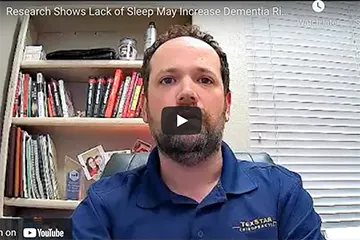
This one is VERY important, ya'll. Buda and Kyle's TexStar Chiropractic Clinical Director, Dr. Michael Henry produced both an article and a video discussing a newfound link between poor sleep habits and dementia. This subject almost certainly relates to many of you reading here. This very day, you may be unwittingly engaged in behavioral practices that could cut out years from your quality of life. It is our sincere wish that Dr. Henry's video below motivates you to reflect upon your sleep habits, and if they are of questionable quality, you take definitive action to correct them.
What is going on
**** Summer greetings, friends. I love seeing all the new parents taking their little ones out and about. I myself am the proud dad of new baby girl and as much fun as it has been to have a baby in the house again, it also has made me acutely aware of the effects of poor sleep. That's why this recent study* really caught my attention. It shows a strong link between lack of sleep during middle age and developing dementia later in life.
A research group in the UK followed 8,000 participants for 25 years. The subjects who reported averaging six hours or less of sleep a night in their 50s and 60s were 30% more likely to develop dementia than those who regularly averaged 7 hours or more of sleep per night. The leading theory as to why we see this correlation is our brains produce a waste product called beta-amyloid during normal function throughout the day. The accumulation of this toxic waste product over time causes a kind of plaque to build up in the brain. This is thought to be a leading cause of Alzheimer's Disease. This toxic waste product is removed from the brain during the deepest stages of the sleep cycle, which occurs in the last few hours of a normal sleep rhythm. If you miss out on those last few hours of precious REM sleep, you may not be giving your body the chance to clear enough of this waste product.
An alternative theory is shorter sleep duration could be a symptom of other underlying conditions which eventually lead to dementia. There are many other studies out there that show how important sleep is to your immune system as well as other brain functions. So here are a few tips on how to get better sleep:
Create the right environment
Create the right routine:
So, we all know there are times in life (such as having an infant at home) where getting seven hours of sleep may seem impossible. However, if we take anything away from this, it is that we should not take our sleep for granted. I not promised going to bed a little earlier or revamping your bedtime routine will serve you better than that extra hour of scrolling Facebook or watching the latest Netflix show. Our mission here at our Buda/Kyle TexStar Chiropractic clinic is to improve our patient's quality of life by providing more complete care. To us, that means providing you any information you can use to keep you healthy and on a lifelong path to maximized physical and mental health. And yes, Chiropractic treatment can help you sleep better. Reach out to us anytime here at Buda/Kyle's TexStar Chiropractic.
Stay healthy and sleep well tonight!
Dr. Michael P. Henry Clinical Director of TexStar Chiropractic
*(Sabia, S., Fayosse, A., Dumurgier, J. Et al. Association of sleep duration in middle and old age with incidence of dementia. Nat Commun 12, 2289 (2021). Https://doi.org/10.1038/s41467- 021-22354-2)
Common Questions
What should I know about new Link Between Sleep and Dementia?
This one is VERY important, ya'll. Buda and Kyle's TexStar Chiropractic Clinical Director, Dr.
How does TexStar approach this?
The first visit is a consultation, an exam, a trial treatment chosen from that exam, and a findings review. Care is non-surgical and drug-free. It may reduce pain and improve function. The doctor decides the plan, and results vary.