
Herniated and Bulging Discs
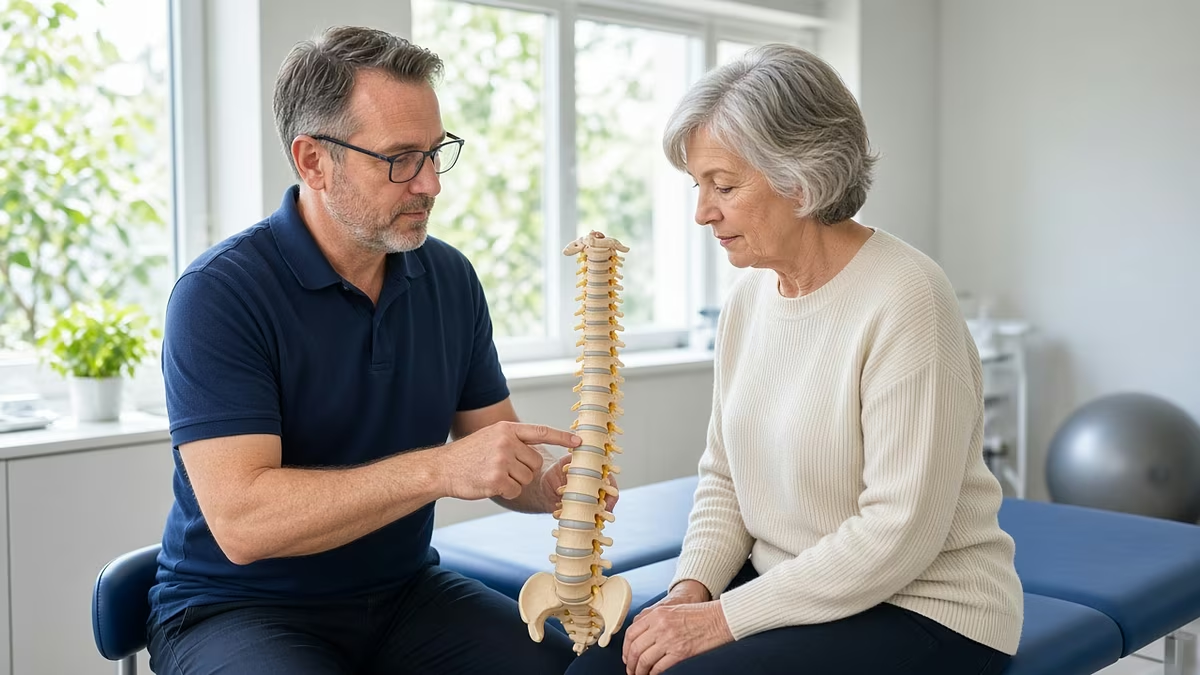
A disc bulge or herniation means some of the disc’s inner material is pressing toward a nerve or the spinal canal. Many bulges show up on imaging in people who feel fine, so the picture has to match the exam.
What it feels like
What a Symptomatic Disc Often Looks Like
- Arm or leg symptoms that follow one consistent path
- Pain that is worse sitting or bending forward and better lying down
- Coughing, sneezing, or straining that sharpens the limb symptoms
- Numbness or weakness in a pattern the exam can reproduce
What We Can and Cannot Say
Non-surgical care may reduce pain and improve function for some disc problems. TexStar does not promise that you will avoid surgery. If strength is falling or pain is unbearable at rest, a surgical opinion is the right next step.
Why Your MRI Report May Not Be the Problem
Disc bulges are common on imaging in people with no pain at all, and they become more common with age. That does not make your report meaningless, it means the finding only matters if it lines up with the level the exam points to and the symptoms you actually have.
Bulge, Herniation, and the Words in Between
Radiology reports use protrusion, extrusion, and bulge to describe how far material has moved and whether it has broken through. Those distinctions influence what the chiropractor expects. Your Chiropractor will go over the results of the exam and discuss a plan of care. A frightening word on a report is not the same as a frightening exam.
How Decompression Is Considered
The spinal decompression table is used when traction is safe and the symptoms line up with the level that hurts. One trial session can happen on the first visit. A series is offered only after the findings review.
Working Alongside a Surgeon
Some people arrive already under an orthopedic or neurosurgical opinion. Bring that, because it changes what the chiropractor is willing to do, particularly after a fusion. The clinic's role in that situation is conservative care within the limits your surgeon set, not a second opinion on the surgery.
Step by step
How a Disc Case Is Worked Up Here
The exam comes first, and any imaging you already have is read against it rather than ahead of it.
- 1Your history, including any prior imaging, injections, or surgery
- 2Nerve testing to see which level your symptoms actually match
- 3A trial treatment, chosen only if traction or manual work is safe
- 4A findings review that states plainly whether this is a referral
Disc Symptoms That Need Urgent Medical Care
These suggest pressure that conservative care should not be managing. Go now, not next week.
- Any loss of bladder or bowel control
- Numbness across the groin or inner thighs
- Weakness in both legs, or a rapidly worsening foot drop
- Severe unrelenting pain that does not ease in any position
- Fever or feeling unwell alongside the spine pain
Where
Available at all four clinics
Austin
4601 Southwest Pkwy, Suite 101, Austin, TX 78735
Mon–Thu 8am–6pm · Fri 8am–12pm
Austin clinicBee Cave
11614 Bee Caves Rd, Suite 110, Bee Cave, TX 78738
Mon–Thu 8am–6pm · Fri 8am–12pm
Bee Cave clinicBuda
181 Cimarron Park Loop, Suite D, Buda, TX 78610
Mon–Thu 9am–6pm · Fri 8am–12pm
Buda clinicDripping Springs / Belterra
13341 W US-290, Suite 102, Austin, TX 78737
Mon–Thu 8am–6pm · Fri 8am–12pm
Dripping Springs / Belterra clinic
First visit
What the $98 New-Patient Visit Includes
- 1
Consultation
You tell the chiropractor what hurts, what you want to get back to, and which clinic you are visiting.
- 2
Exam
A neuro-musculo-skeletal exam looks for the source: the joint, the muscle, and the nerve.
- 3
Trial Treatment
One session of spinal decompression, cold laser, or spot cryotherapy, chosen from the exam. That session is included in the visit.
- 4
Findings Review
Your Chiropractor will go over the results of the exam and discuss a plan of care.
Questions
Common Questions
Should I bring my MRI?
Yes, if you have one. The chiropractor still examines you. The report does not replace the visit.
Do you treat neck and low-back discs?
Both can be evaluated. The table setup is different for the neck and the lumbar spine.
Can a disc go back in?
Symptoms frequently settle over time, and function often improves with conservative care. Nobody can promise you a specific change on a follow-up scan, and any clinic that does is overselling.
Is an adjustment safe with a herniated disc?
It depends entirely on the exam. The chiropractor may use a gentler technique, an instrument, or avoid the level altogether and work elsewhere. Tell them about the diagnosis up front.
I have had a fusion. Can I still be seen?
Often yes, with restrictions. Bring the operative details. Some fusions mean traction is off the table and the plan focuses on the segments above and below.
Will you tell me if I need surgery?
The chiropractor will tell you when findings point toward a surgical opinion and will refer you. That call belongs to a spine surgeon, and it is not one this clinic makes for you.
Keep reading
Related Pages
Spinal Decompression
The main non-surgical tool considered for fitting disc cases.
Pinched Nerve
When the tingling and weakness are the main story.
Sciatica
The leg pain pattern a lumbar disc often produces.

Founder
Dr. Michael P. Henry, DC
Dr. Henry founded TexStar Chiropractic in 2011. He grew up in Manchaca, studied kinesiology at The University of Texas, and was appointed to the Texas Board of Chiropractic Examiners. Your visit is with the chiropractor at the clinic you choose.
Get an exam, not a guess
The consultation, the exam, one trial treatment, and a review of the findings, in a single appointment. Mention the $98 offer when you book. Restrictions may apply.