
Spinal Decompression Therapy
Non-surgical spinal decompression cycles gentle traction on the neck or lower back when a disc may be irritating a nerve. It is skipped when traction would be unsafe.
Is it a fit
Patterns That Point Toward the Table
- Back or neck pain that travels into a leg or an arm
- Symptoms that ease when you lie down and return when you sit
- An exam that lines the limb symptoms up with one spinal level
- Imaging that matches where the chiropractor found the problem
Who May Be a Candidate
People with back or neck pain that travels into an arm or leg, and whose exam and history fit a disc problem, are the usual candidates. The chiropractor looks at strength, reflexes, and how symptoms change with position before recommending a trial.
What a Session Is Like
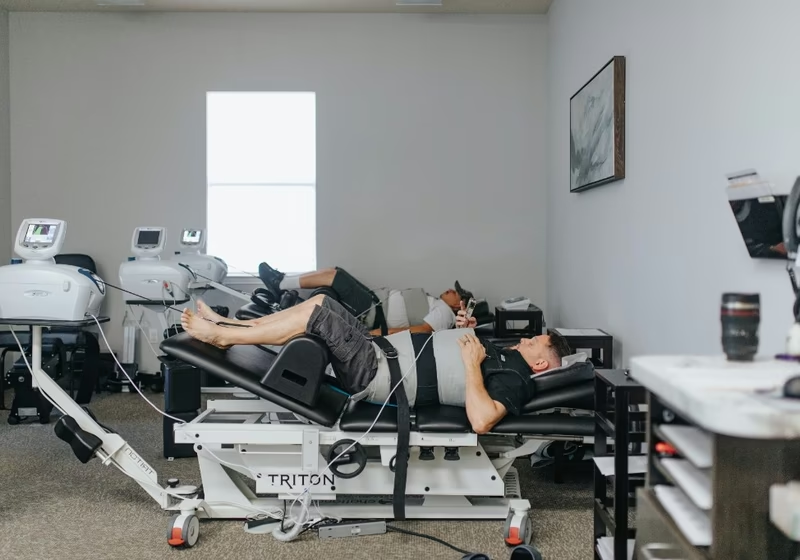
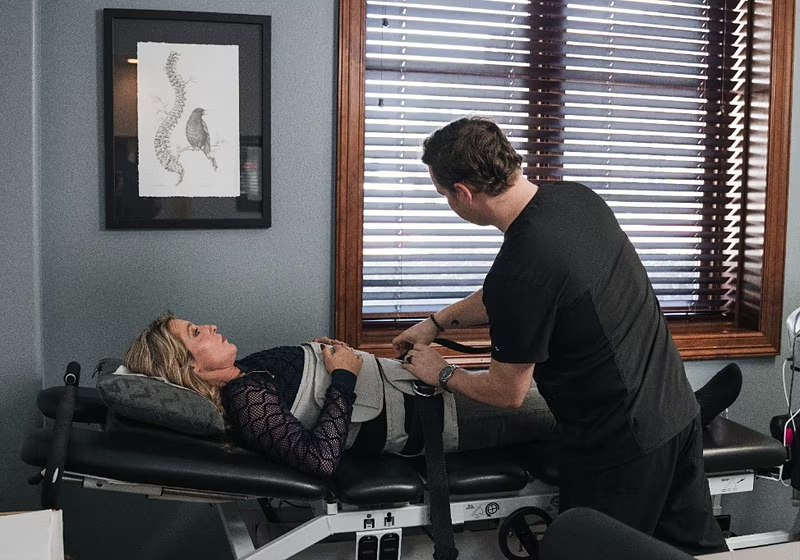
You stay dressed and lie on the table with a harness at the hips or a cradle under the head. The machine pulls to a set tension, holds it, then releases, repeating that cycle for roughly fifteen to twenty minutes. You hold a stop switch the whole time. Most people describe a stretch, not pain, and a few fall asleep.
Neck and Lower Back Are Different Setups
Lumbar decompression uses a harness and a split table so the lower half can travel. Cervical decompression cradles the skull and works at much lower tension, because the neck needs a fraction of the force the low back does. A clinic that treats both uses different settings and different positioning for each.
How Progress Is Judged
The measure is whether the limb symptoms pull back toward the spine, whether strength holds, and whether you can sit or stand longer than before. Those are checked between sessions. If nothing moves after a fair trial, continuing the same series is not the answer, and the chiropractor should say so.
Who Is Not Put on the Table
Severe osteoporosis, a spinal fusion the chiropractor says should not be tractioned, an unstable fracture, or pain with fever and feeling ill need medical care before anyone uses this table. Decompression is not a substitute for surgery when bowel or bladder control is changing.
How It Fits the First Visit
The new-patient trial can include one decompression session if the chiropractor selects it. That session is for the exam. A longer plan, if any, is discussed after findings are reviewed.
Reasons to Be Seen Medically Instead
Traction is not the right first move for any of these. Some need an emergency department the same day.
- Losing control of your bladder or bowels
- Numbness through the saddle area between the legs
- A foot or hand that is getting weaker by the hour
- Spine pain with fever, chills, or unexplained weight loss
- A fracture or fusion your surgeon has said should not be tractioned
Where
Available at all four clinics
Austin
4601 Southwest Pkwy, Suite 101, Austin, TX 78735
Mon–Thu 8am–6pm · Fri 8am–12pm
See the office and meet the doctor in AustinBee Cave
11614 Bee Caves Rd, Suite 110, Bee Cave, TX 78738
Mon–Thu 8am–6pm · Fri 8am–12pm
See the office and meet the doctor in Bee CaveBuda
181 Cimarron Park Loop, Suite D, Buda, TX 78610
Mon–Thu 9am–6pm · Fri 8am–12pm
See the office and meet the doctor in BudaDripping Springs / Belterra
13341 W US-290, Suite 102, Austin, TX 78737
Mon–Thu 8am–6pm · Fri 8am–12pm
See the office and meet the doctor in Dripping Springs / Belterra
First visit
What the First Visit Includes
Questions
Common Questions
Is this the same as hanging from a pull-up bar?
No. The table applies a measured cycle and then releases it. You stay strapped in and can stop the session.
Does every clinic offer it?
Spinal decompression is part of care at all four TexStar clinics. Knee on Trac is a separate machine and is not at every office.
Does it hurt?
Most people feel a stretch through the low back or neck. Sharp or radiating pain during a cycle means the tension or the position is wrong, and the session should be stopped and changed.
Will decompression fix my disc?
It may reduce pain and improve function for some disc-related cases. It does not remove disc material, and no honest clinic can promise an imaging change.
Can I do decompression and adjustments together?
Often, yes. They do different jobs, and the chiropractor may pair them or keep them separate depending on how you respond to the first sessions.
Do I need an MRI before I start?
Not always. If you have one, bring it. The exam still decides, and the chiropractor will tell you when imaging would genuinely change the plan.
Keep reading
Related Pages
Herniated Disc
What a bulge means, and why the picture has to match the exam.
Sciatica
Leg pain along the nerve, and the tissues that imitate it.
Knee on Trac
The knee decompression device, at Bee Cave and Buda only.

Founder
Dr. Michael P. Henry
Dr. Henry founded TexStar Chiropractic in 2011. He grew up in Manchaca, studied kinesiology at The University of Texas, and was appointed to the Texas Board of Chiropractic Examiners. Your visit is with the chiropractor at the clinic you choose.
Get to the Root of Your Pain
The consultation, the exam, one trial treatment, and a review of what your doctor found, in a single appointment.